About Noodle Flour Mixers
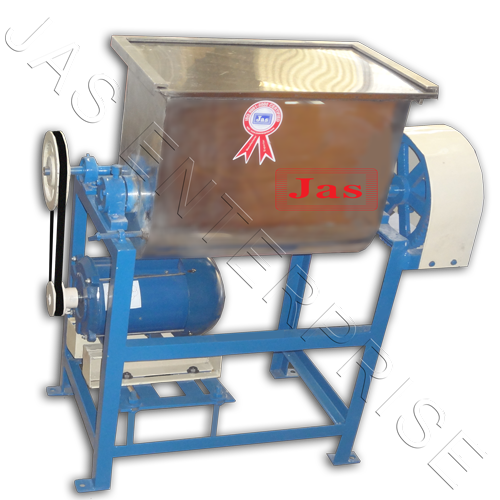
Mixing formula ingredients is often carried out in a horizontal flour mixer for 10-15 minutes. Since the horizontal mixer seems to have better mixing results in commercial noodle production. Mixing results in the formation of a crumbly dough with small and uniform particle sizes. Since the water addition level is relatively low (Vs. bread dough), gluten development in noodle dough during mixing is minimized. This improves the dough sheet ability, sheeted dough smoothness and uniformity.
Limited water absorption also slows down noodle discoloration and reduces the amount of water to be taken out during the final drying or frying processes.
The paddles are positioned to move the material in opposing lateral directions as well as radically. The paddle design is generally employed where friable materials are being blended.
Horizontal Noodle Dough Mixer consists of several elements: a centrally mounted horizontal shaft that rotates within a cylindrical container, paddles, ploughs mixing elements that are attached to the centrally mounted shaft, special openings at the top for feeding materials, manually tilt able tank operated, inside a cylindrical conduit and a complete drive unit.
Innovative Mixing TechnologyFeaturing a fully automatic PLC control system, these noodle flour mixers optimize your dough preparation processes with high precision and minimal manual intervention. The advanced engineering guarantees consistent, high-quality output with reduced energy usage and minimal operational noise, making them ideal for high-demand environments.
Flexible Capacity for Diverse NeedsWith the ability to handle 10 to 200 kg of dough per hour, our mixers suit a variety of production volumes, from boutique operations to large commercial facilities. The stainless steel construction ensures both hygiene and robust, long-lasting performance even with frequent usage.
FAQs of Noodle Flour Mixers:
Q: How does the PLC control system enhance mixer operation?
A: The PLC (Programmable Logic Controller) system automates the mixing process, allowing you to customize timings and speed. This ensures consistent results, reduces manual effort, and minimizes operational errors in both small and large-scale production.
Q: What are the benefits of using a stainless steel noodle flour mixer?
A: Stainless steel provides excellent durability, rust resistance, and is easy to clean, making it ideal for food handling applications. It also contributes to hygiene and meets food safety standards, enhancing product quality.
Q: When should the mixer undergo maintenance to ensure longevity?
A: Routine maintenance is advised every few months, depending on frequency of use. Regular cleaning and inspections will help prevent wear, especially since the machine is under warranty for one year against manufacturing defects at your site.
Q: Where can these noodle flour mixers be installed for optimal performance?
A: These mixers are designed with a compact structure, allowing them to fit into various settings like industrial kitchens, commercial factories, and food production lines across India, ensuring seamless integration into most work environments.
Q: What is the usage process for operating these Automatic mixers?
A: Users simply load ingredients, select the desired mixing program via the PLC control panel, and initiate the operation. The mixer does the rest automatically, streamlining dough preparation with minimal manual intervention.
Q: How do these mixers support eco-friendly and energy-efficient operations?
A: Our mixers feature lower energy consumption, reducing electrical costs while maintaining high efficiency. Their design promotes sustainability in food production, aligning with modern eco-friendly business practices.








 Send Inquiry

 Send Inquiry
 Send Inquiry
 Send SMS


